Event Date: September 23-24, 2026
Location: O’Hara Technologies, Richmond Hill, Ontario, Canada
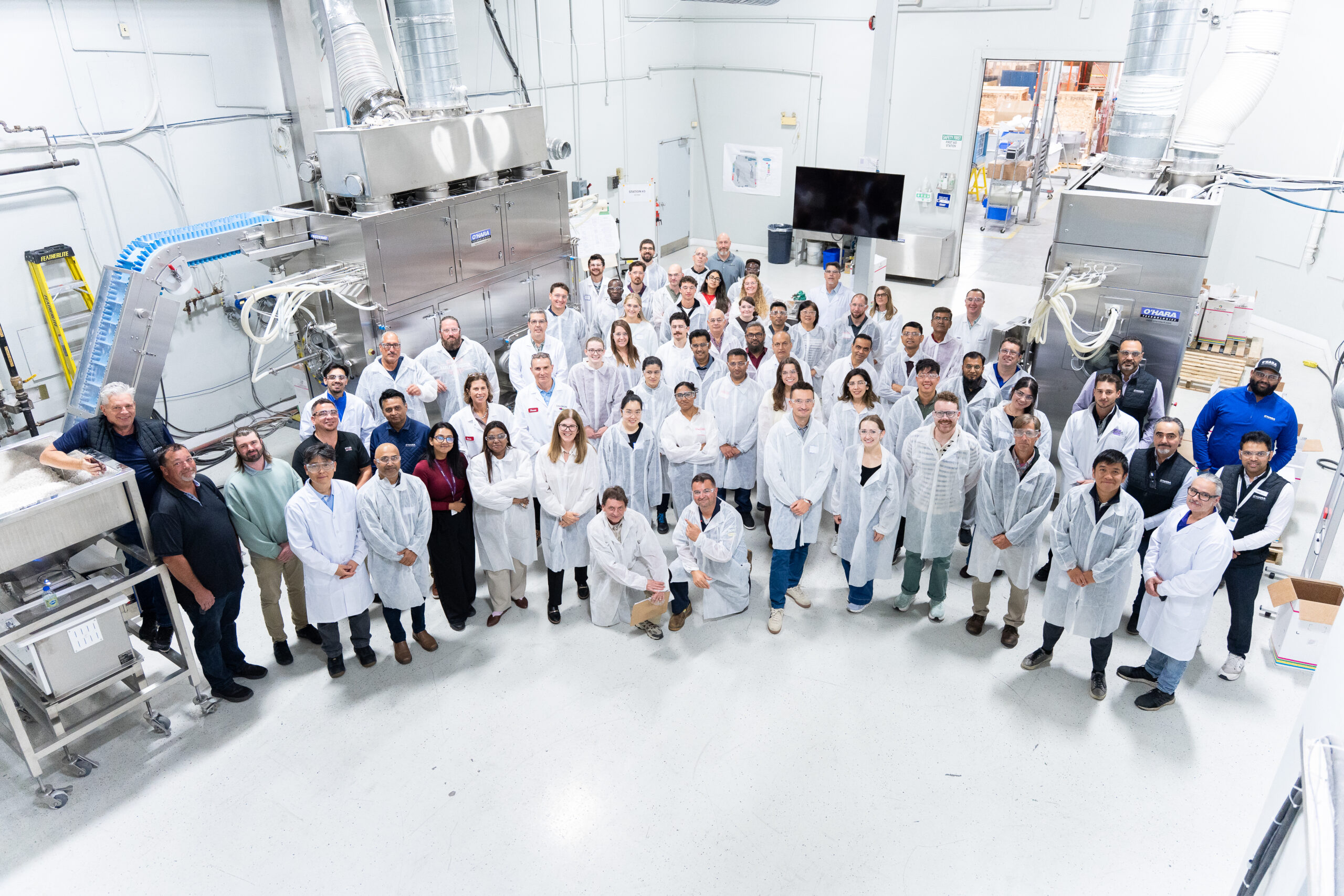
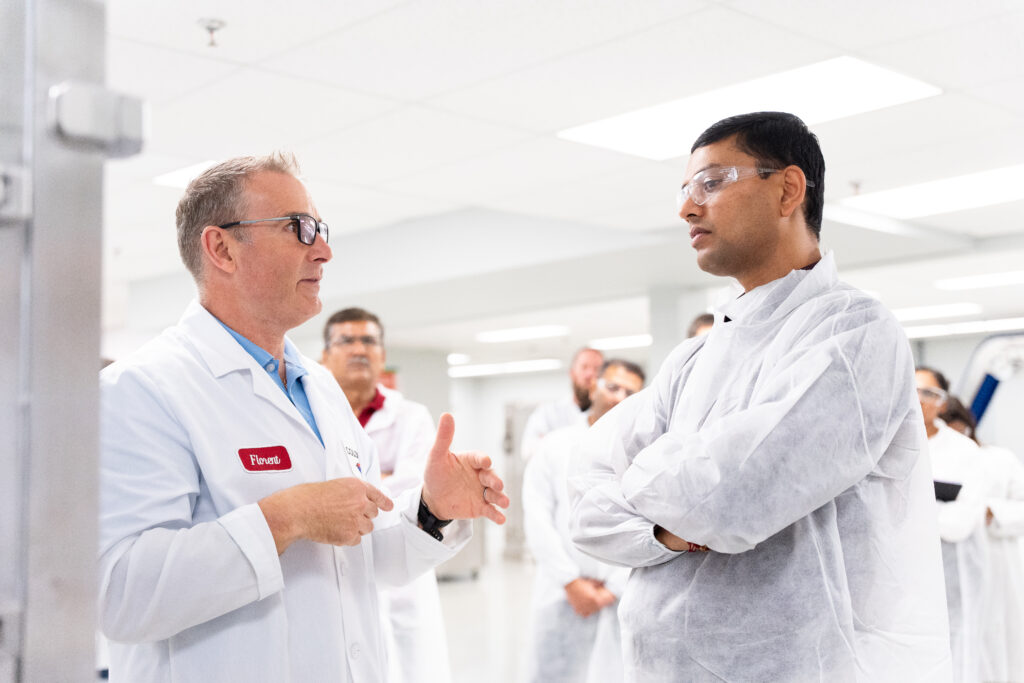
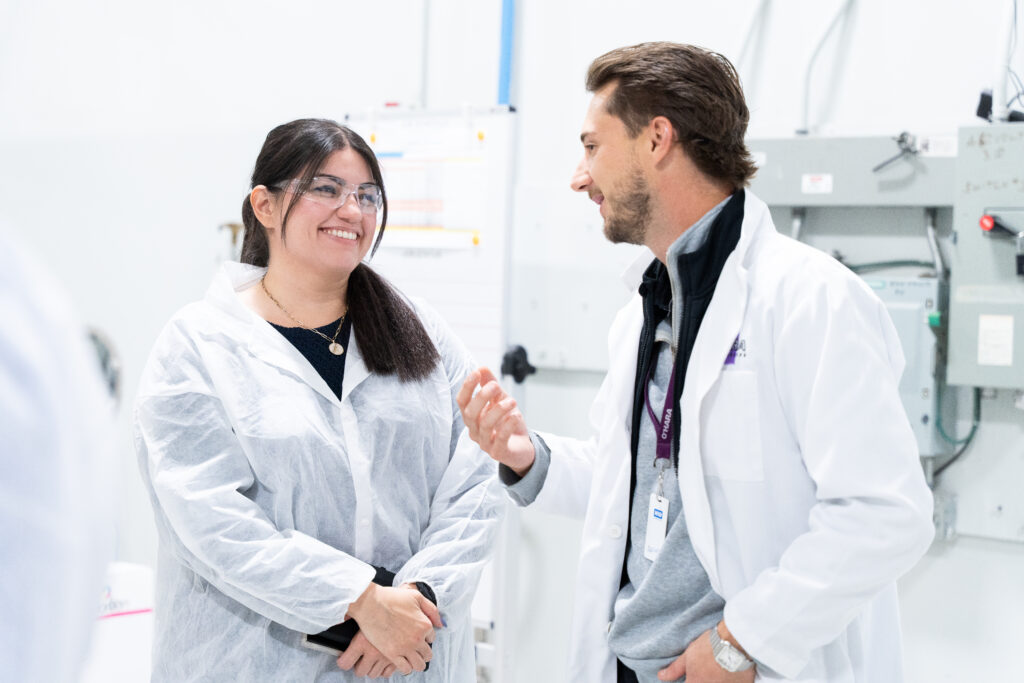
Last week, O’Hara Technologies and Colorcon® hosted Tablet Coating School 2026 at our Richmond Hill facility: a complimentary two-day program that brought Colorcon’s formulation expertise and O’Hara’s equipment engineering into one room for pharmaceutical professionals working with film-coated tablets.
Over September 23 and 24, formulators, process engineers, production leaders, R&D scientists, and QA professionals from pharmaceutical & nutraceutical companies spent two full days with us learning, testing, and troubleshooting side by side. Some came to sharpen fundamentals for newer team members. Others came with a specific production headache they wanted to solve, or with a new coating platform on their evaluation list.
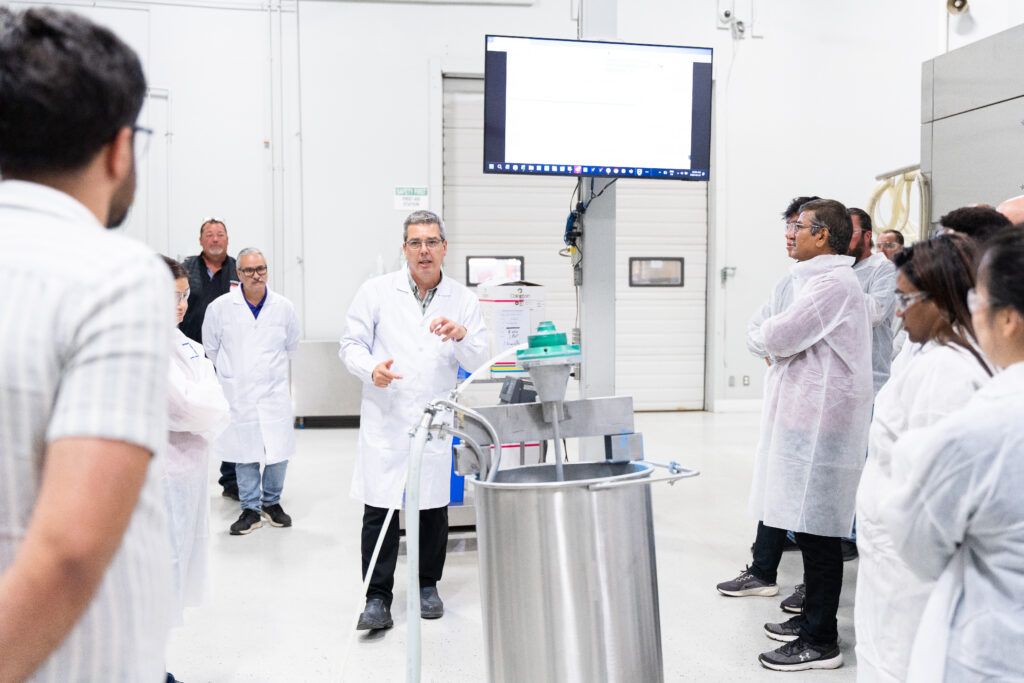
What made this school different was the format. Most coating training is either theory-heavy or equipment-heavy. We set out to do both at once. Colorcon’s team explained the science of the coating itself, O’Hara’s engineers explained the machines that apply it, and then attendees went out onto our floor and put both into practice on real production and pilot-scale equipment.
Why a Coating School, and Why Now?
Film coating looks simple from the outside. A tablet goes into a pan, a thin layer of polymer is sprayed on, and it comes out glossy and uniform. Anyone who has run a coating process at scale knows the reality is very different.
Coating is where the variability of every upstream step becomes visible. A tablet core that is slightly too friable will erode in the pan. A dispersion that was mixed too aggressively will foam and spray poorly. An inlet air setting that worked perfectly in the lab will over-dry or over-wet the bed at production scale. And because coating is often one of the final steps before packaging, a defect found here means an entire batch of otherwise finished product is at risk.
The most common issues we hear about from manufacturers fall into three buckets:
Scale-up bottlenecks: a coating process that performs well in development but fails to translate cleanly to pilot or commercial equipment
Coating variability: inconsistent colour, weight gain, or film thickness from tablet to tablet and batch to batch
Process control: difficulty keeping the process inside its operating window, especially when raw materials, environmental conditions, or operators change
None of these problems can be solved from only one side of the process. The coating formulation, the tablet core, and the equipment all interact. That is exactly why partnering with Colorcon made sense. Their teams know the coating systems inside out; ours know the pans, spray systems, and airflow that turn those systems into a finished film. Together, we can show the full cause-and-effect chain, not just half of it.
The timing also matters. Manufacturers are expanding portfolios, bringing on newer staff, building new facilities, and taking a serious look at continuous processing. All of that raises the value of hands-on, practical training that people can apply the week they return to work.
Day 1 in the Classroom: Back to Fundamentals
Day 1 opened in the classroom, and for good reason. Before anyone touches a spray gun, it helps to be clear on what a coating is supposed to accomplish and what has to go right for it to work.
Why we coat
The session started with the question every coating program should be able to answer: why coat this tablet at all? Film coatings do far more than add colour. They improve swallowability, mask unpleasant tastes and odours, protect moisture- or light-sensitive actives, support brand identification and anti-counterfeiting, and in the case of functional coatings, control where and when a drug is released in the body. Knowing which of these goals matters most for a given product shapes every decision downstream, from polymer choice to target weight gain.
Tablet design
Next came a topic that is often underestimated: the tablet core itself. The shape, hardness, friability, and surface of a core have a direct effect on how well a coating goes on. Deep or sharp embossing can fill in (logo bridging). Sharp edges wear faster in a tumbling bed. Soft or friable cores shed dust that ends up embedded in the film. A good coating process starts with a core designed to be coated, and several attendees noted this was a conversation they wanted to have with their compression teams back home.
Coating formulation fundamentals
Colorcon’s specialists then walked through what actually goes into a film coating system: polymers, plasticizers, pigments and opacifiers, and the role each plays in film strength, flexibility, adhesion, and appearance. The discussion covered how fully formulated systems simplify preparation and reduce variability compared with building a formula from individual excipients in-house, and how the choice between immediate-release, moisture-barrier, and modified-release systems follows directly from the product’s goals.
Continuous coating, equipment, and spray guns
The classroom portion closed with an overview of the process side: how batch and continuous coaters differ, how spray guns atomize a liquid into droplets, and how airflow, temperature, and pan speed work together to deposit and dry each layer of film. This set up the rotation that followed, so that every setting attendees adjusted on the floor had a reason behind it.
Five Stations, One Coating Process
After the classroom, attendees split into small groups and rotated through hands-on stations on our production floor, spending roughly 40 minutes at each. The groups were kept deliberately small so that everyone had time on the equipment, not just a view of it. The stations were arranged to follow the coating process itself, from preparing the dispersion through to applying and drying the film.
Each station focused on a different stage of the process: dispersion preparation, spray pattern optimization on the FCC 75, continuous coating on the FCC 500, batch coating on the GEN II, and fluid bed processing.
Station 1: Dispersion Preparation
Every coating run starts in a mixing vessel, and small mistakes here show up later as spray problems or film defects. At this station, attendees prepared coating dispersions using Colorcon systems and saw first-hand how technique affects quality.
The key lessons were practical ones. Powder should be added steadily into a well-formed vortex, not dumped in, so that it wets out evenly without clumping. Mixer speed needs to be high enough to create that vortex but not so high that it pulls in air and creates foam, which leads to inconsistent spraying and defects on the tablet surface. Solids content and hydration time both matter: a dispersion that hasn’t been given enough time to fully hydrate, or one mixed at the wrong solids level, will behave differently in the spray gun than the one used during development.
Attendees also discussed how to make dispersion preparation repeatable across shifts and sites, which is one of the simplest and most overlooked ways to reduce batch-to-batch variability.
Station 2: Spray Pattern Optimization
If dispersion preparation sets up the coating, the spray system decides how evenly it lands. At this station, a live spray demonstration made the invisible visible: attendees could watch how the spray pattern changed as settings were adjusted.
The group worked through the main levers:
- Atomizing air controls droplet size. Too little and droplets are large and wet, risking overwetting and sticking; too much and droplets can dry before they reach the tablet (spray drying), leaving a rough surface and wasting coating material.
- Pattern (fan) air shapes the width of the spray. The goal is a uniform pattern that covers the bed evenly without overlapping excessively between guns or hitting the pan walls.
- Gun-to-bed distance affects how much drying happens in flight. Too close risks localized overwetting; too far increases spray drying.
- Spray rate has to be balanced against the drying capacity of the process air. Push the spray rate past what the airflow can dry and defects follow.
Seeing these interactions in real time, rather than reading about them, makes the cause-and-effect far easier to remember back on the production floor.
Station 3: Continuous Coating on the FCC 500
For many attendees, this was their first time getting close to a continuous coater in operation. The FCC series is designed to coat tablets in a continuous flow, rather than in discrete batches, which changes the conversation around throughput, consistency, and footprint.
In a continuous coater, tablets move through the drum while being sprayed, so each tablet experiences a highly consistent residence time and spray exposure. The result is excellent tablet-to-tablet uniformity at high output. Because the process runs at steady state, it can also be easier to monitor and control than a batch process, where conditions change from start to finish.
The station also covered the practical side of running continuous equipment: start-up and shutdown, how the process reaches and holds steady state, and cleaning and washing between campaigns. Attendees asked sharp questions about where continuous coating makes the most sense, a topic we return to below.
Station 4: Batch Coating on the GEN II
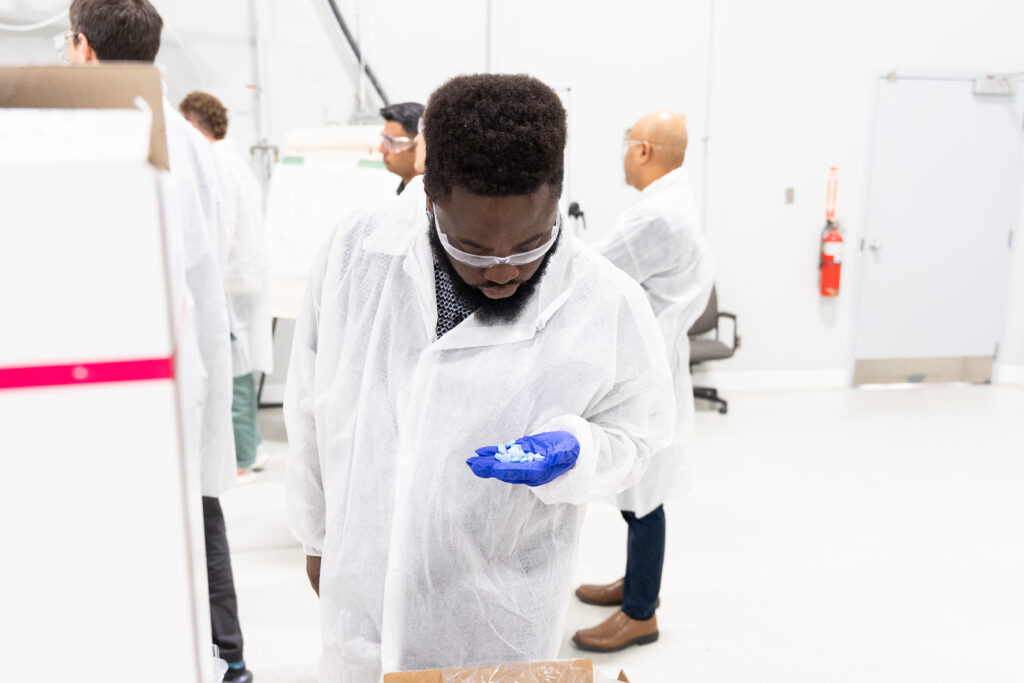
The GEN II station gave attendees hands-on time with O’Hara’s batch coating platform, running Colorcon coating systems under real conditions. On Day 1 the focus was immediate-release (IR) coatings; on Day 2 the station moved to modified-release (MR) coatings, where the demands on process control are considerably higher.
For IR coatings, the conversation centred on appearance and efficiency: achieving uniform colour at the target weight gain, minimizing coating time, and avoiding cosmetic defects. For MR coatings, the stakes change. The film is no longer just cosmetic; its thickness and integrity determine how the drug is released. That means tighter control over spray rate, bed temperature, and weight gain, plus careful attention to curing where required.
Attendees also looked at the design features that support consistency in a batch pan: how the pan and baffles keep the bed mixing evenly, how airflow is directed through the bed, and how the spray system is set up across the pan width. The group discussed how parameters developed at lab scale on a smaller coater translate to production scale, which is where many scale-up problems begin.
Station 5: Fluid Bed Processing
The final station broadened the view beyond pan coating. Fluid bed technology suspends particles in an upward stream of air, which makes it well suited to granulating, drying, and coating smaller particles such as pellets, beads, and granules, where a pan would not be practical.
Attendees explored where fluid bed processing sits alongside pan coating in an oral solid dosage workflow, how the airflow and spray principles overlap with what they had just seen on the coaters, and where each approach is the better fit. For teams working on multiparticulate or modified-release products, this station helped connect the dots between the two technologies.
Day 2: Going Deeper
Day 2 built on the foundation of the first day with a focused two-hour session, including the move to modified-release coatings on the GEN II. It was followed by an optional open classroom for attendees who wanted more time on specific topics.
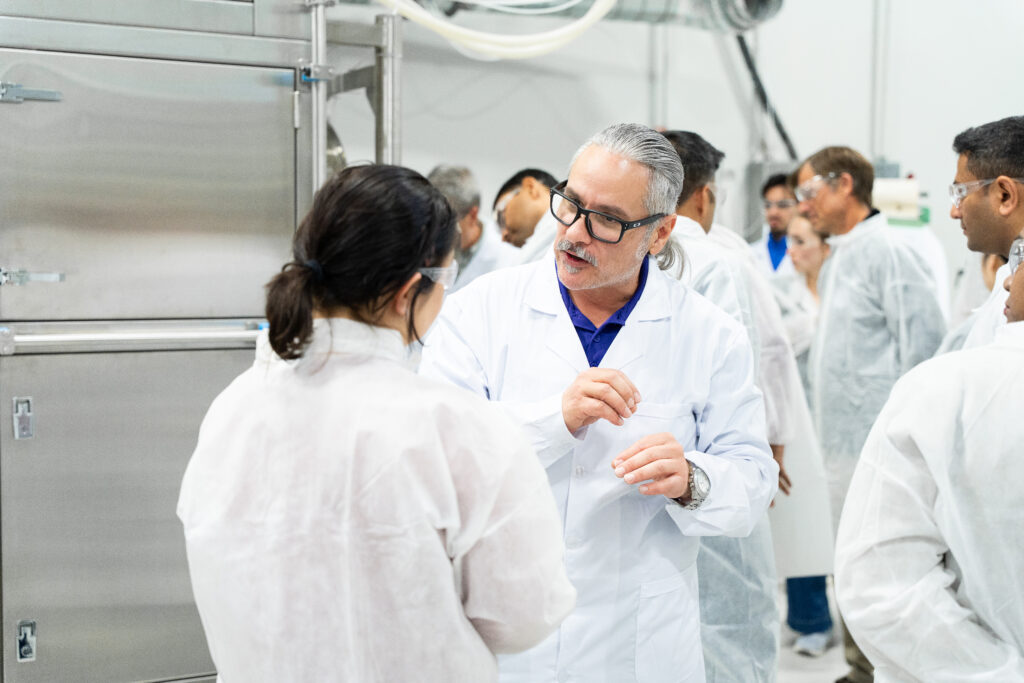
The open classroom became a space for problem-solving. Attendees brought their own questions and production challenges to O’Hara’s engineers and Colorcon’s technical specialists, from defects they were seeing on specific products to decisions about upcoming equipment investments. This kind of direct, unscripted conversation is difficult to have at a trade show booth or on a video call, and it is one of the main reasons we believe in hosting training in person.
Troubleshooting: Reading What a Defect Is Telling You
A recurring theme across both days was troubleshooting. Coating defects are rarely random. Most are symptoms of a process running outside its window, and learning to read them is one of the most valuable skills a coating team can have. Here are some of the most common defects and their typical root causes:
- Picking and sticking: Film pulls away where tablets stick to each other or to the pan. Usually a sign of overwetting, from a spray rate that is too high, a bed temperature that is too low, or droplets that are too large.
- Orange peel (roughness): A textured surface resembling citrus skin. Often caused by droplets drying before they spread properly, from excessive atomizing air, a high-viscosity dispersion, or a gun too far from the bed.
- Logo bridging: Film spans across embossed logos or break lines instead of following the contour. Linked to both formulation (film strength and adhesion) and tablet design (engraving depth and angle).
- Twinning: Two tablets stuck together, common with flat-faced or capsule-shaped tablets. Often tied to overwetting and tablet shape.
- Erosion and chipping: Edges wear away or break off. Usually rooted in core friability or hardness, made worse by excessive pan speed or a long process time.
- Colour variation: Uneven colour between tablets. Commonly caused by insufficient coating, poor bed mixing, or an uneven spray pattern.
- Cracking: Fissures in the film, often related to internal stress in the film from formulation or from core expansion.
The broader lesson was that the fix is rarely a single dial. A defect that appears in the coater may originate in the dispersion, the tablet core, or the airflow and drying capacity of the process. The most effective teams trace cause and effect across unit operations rather than correcting symptoms late in the process.
Batch vs. Continuous: Which Is Right for You?
With both the GEN II and the FCC 500 on the floor, one of the most frequent questions was a practical one: when does continuous coating make sense, and when is batch still the better choice? There is no universal answer, but a few factors consistently shape the decision.
Batch coating remains the flexible workhorse of the industry. It suits facilities running many different products, smaller or variable volumes, frequent changeovers, and development or clinical work. Batch processes are well understood, widely validated, and easy to adapt from one product to the next.
Continuous coating comes into its own for high-volume products and long campaigns. Its strengths are consistent tablet-to-tablet uniformity, high throughput, steady-state control, and the ability to integrate with continuous upstream operations. For manufacturers focused on output and consistency for a smaller number of high-volume products, it can be a compelling option.
In practice, many facilities benefit from both: batch for flexibility and development, continuous for their highest-volume lines. The right mix depends on product portfolio, volumes, available floor space, and long-term manufacturing strategy. It’s a conversation our team is always happy to have.
A Fitting Moment in Our 50th Year
Hosting Tablet Coating School in 2026 carried extra meaning for us. This year marks O’Hara Technologies’ 50th anniversary. Since our founding in Richmond Hill, our work has centred on one question: how do you coat tablets consistently, efficiently, and at a scale manufacturers can trust?
Five decades of answering that question have given our team a deep well of practical knowledge, much of it learned alongside the customers and partners who run our equipment every day. Opening our doors and sharing that knowledge, together with a partner as respected in coating science as Colorcon, felt like exactly the right way to mark the milestone. It reflects what we believe the next fifty years should look like: collaborative, hands-on, and focused on helping manufacturers get better results.
Thank You
A sincere thank you to Colorcon for partnering with us and bringing their formulation expertise to Richmond Hill, and to every attendee who invested two days in learning with us. Thank you as well to the O’Hara team across engineering, service, production, and operations who set up the stations, ran the demonstrations, and made the event possible.
Continue the Conversation
Whether you attended or missed this year’s school, our coating specialists are happy to talk through your process, from lab-scale development on the Labcoat, to production-scale batch coating on the GEN II, to high-volume continuous coating on the FCC series.
To discuss your coating challenges, follow O’Hara Technologies on LinkedIn, YouTube, and Instagram for highlights and photos from the event.
For partnership opportunities or to schedule a meeting with our team, please get in touch here.